Wednesday, December 17, 2008

This one's for you, dl004d

Today I went to the Super Stop 'n' Shop. Like many other grocery stores, they have a Stop 'n' Shop card, which customers can use to get advertised discounts.

I don't know if I have a Stop 'n' Shop card or not, because whenever I sign up for that kind of thing, I do it knowing full well that I will never actually carry the card with me when I go to the merchant who has given me the card.

When I went through the check-out line, the cashier asked if I had a Stop 'n' Shop card. I said I couldn't remember, but that, at any rate, I didn't have it with me.

The cashier replied: "That's ok. You don't need the card. We just give you the discount anyway."

So why even have a card? And why have special "card-only" discounts, if you're just going to give them to everyone anyway?

Labels:

Monday, February 25, 2008

Rocking the I-91 Corridor

I don't write concert reviews, but I went to two great shows this weekend, and while the guy sitting to my left or right (depending on the show) was hard at work, I, too, learned a couple of things:

#1 According to Lyle Lovett, heard on Saturday night at the Calvin Theater in Northampton, the best apple pie can be found at the Red Lion Inn in Stockbridge, Mass. It's apparently second only to his cousin Wilbert's apple pie, which he admitted was difficult to get, since "you have to know him."

#2 It's not unusual for Jeff Tweedy, seen on Sunday night at the Shubert Theater in New Haven, to think that people in the front row are so excited to see Wilco that they've peed themselves.

#3 Buying a band T-shirt and putting it on immediately is kinda lame. I mean, we know you're a Wilco fan, and we all saw those T-shirts on sale downstairs, so just put it on at home, dude. The above sticker may just be the greatest band sticker ever, though.

#4 John Hiatt likes cheese. Also he wrote "Have a Little Faith in Me," not Jewel, which I did not know.

#5 Beer-swilling Wilco fans over 50 rival drunk college kids at football games in terms of sheer loud-mouthed annoyingness.

For much less randomly subjective reviews of these shows, you'd be advised to read ERD's thoughts.

Labels: ,

Monday, January 21, 2008

Freeze the puck, eh?

MONTREAL, Canada -- The Canadiens were playing the Penguins only a few blocks from our hotel this weekend in hockey-crazed Montreal. Hockey was on every t.v. in every bar, but, as it turns out, I don't mind watching hockey on t.v. (not as much as football, at any rate). I even checked the scores, as you can see here.

At one point I offered up the tidbit that at any given moment, there's at least one if not two hockey pucks stashed in the freezer at 2117 Chadbourne, ready for a game to break out. ERD, ever the investigative journalist, challenged me to defend the claim that frozen pucks make for a better game. At the time, and with the encouragement of an engineer sitting next to us at the bar, I made the assertion that a frozen puck interacts more efficiently with the ice because it reduces friction, since both ice and puck are in a similar state (i.e. frozen). I still believe that to be true, although the Science of Hockey says that a frozen puck is superior on the ice because it doesn't bounce as much as a tepid rubber puck.

Listen, I'm no physicist, but either way: if you're gonna drop the puck, hoser*, you gotta freeze it first.

* According to the Urban Dictionary, "hoser" refers to the hockey losers who had to hose down the ice after a game, prior to the inception of the zamboni, which is my favorite part of a hockey game anyway.

Labels:

Wednesday, April 25, 2007

Call for Procrastination

It's Too Nice Out and I'm Too Lazy: Gender, Discourse, Hybridity, Space, Time, Earth, Wind and Fire: Provoking Critical Dialogue about Critical Dialogue: A Conference.

This conference will attempt to address the critical gap between criticism and critical inquiry in the humanities, social sciences, food sciences, comparative nanotechnology, liberal fingerpainting arts, and pre-Tzarist Russian studies. Papers that address the following questions will be considered for 100-member panels with no audience or one-person panels with 100-member audiences who have been instructed not to ask questions:

What is "it" all about?
What is "it"?
What "is"?

Proposals should be between 5 and 10 words. Proposals exceeding the 10 word limit will be posted on the internet and laughed at. Proposals under the 5 word limit will be published immediately in the finest journal of comparative nanotechnology (etc.) possible. Presentations will be limited to 20 minutes, unless the participant has a speech impediment, in which case he, she or it may take as long as desired or 12 hours, whichever is more.

This conference will take place on a beach yet to be determined, either on the island of Bermuda in May or on a craggy rock in the middle of Lake Michigan in January. The chosen few will be informed of their acceptance 15 minutes before their panel is set to begin. Talks may be phoned in or mimed.

Submission deadline: yesterday.

Labels:

Friday, April 13, 2007

So it goes

I was just reading Kurt Vonnegut's obituary in the Times, when this part struck me:
He also studied for a master's degree in anthropology at the University of Chicago, writing a thesis, "The Fluctuations Between Good and Evil in Simple Tales," that was rejected unanimously by the faculty.
Whoa. That's seriously harsh.

I used to read Kurt Vonnegut in high school -- for some reason, I associate Slaughterhouse-five with Mr. Knowles' Calculus class. I'm actually not sure why, but it may have to do with a friend who was always talking about Kilgore Trout in that class, and who turned me on to Vonnegut. Looking at my bookshelf, I'm reminded that one of my favorite Vonnegut books was a collection of short stories, Welcome to the Monkey House and, in particular, I remember the final story, which we may have read in 9th grade English class, I don't know: "Tomorrow and Tomorrow and Tomorrow." It's set in the future, when the world is so overpopulated that Iowa is on the "outskirts of Chicago" and a strange concoction of "mud and dandelions" has given the entire population immortality, such that everyone resents everyone else and their maniacal drive to live forever.

When I lived in New York, I went to the Barnes and Noble on Union Square one night to see Kurt Vonnegut give a reading. The place was packed -- I remember I was squashed against a bookshelf of SAT guides, and could just barely see the author's wild tuft of hair. But it was so exciting to see Kurt Vonnegut, this entity who's books I'd devoured in high school, and who represented an intangible category of great American writers to me. Yet there he was on the second story of a bookstore in New York, up against the windows. It was as if I couldn't believe he existed as a human being, operating independently of his novels. Where had he come from? What made him decide to do that cameo in "Back to School"?

I wonder if authors like Vonnegut realize the kind of impact they have on their readers -- how when we read their books, they become associated with some particular moment in time, or some particular part of our lives, that they're both unreal to us and yet so representative of those exact moments and places in our own lives. And how amazing, then, it is to see them in person, cracking jokes and reading their poetry and talking about Kilgore Trout.

I feel bad that Vonnegut's thesis was roundly rejected by the faculty. If any of those snooty professors are alive today, I'll bet they're kicking themselves.

Labels:

Sunday, April 01, 2007

Note to IRS: I hate you

If you know me, you know I hate doing my taxes. I used to be very fond of filling out forms -- no, I'm not sure why, either -- but doing my taxes swiftly killed that mindless mode of entertainment. The only thing that could redeem doing my taxes would be the ability to claim this exemption:
Ottoman Turkish Empire Settlement Payments
Turbotax may think they're all that, but next year I swear I'm finally going to pay someone else to do my taxes, and I'll encourage them to find me some of that Ottoman Turkish Empire to settle. Take that, IRS!

Labels:

Tuesday, March 06, 2007

It's Better in the Butt.

I've been dragged into a blog-battle over this article about how weird Wesleyan is -- or how weird Wesleyan was -- in today's Hartford Courant. And of course the kicker is this comment, made by some junior from Pennsylvania:
"You don't see many protests going on at Berkeley either," she said.
Listen, the truth is that the biggest rallying cry we heard in the late-'90s at Wesleyan was "We're not gonna protest! We're not gonna protest!" It hasn't been the meat-slinging university portrayed so admirably by the film PCU for a couple of decades. But hauling Berkeley into the fray? That's just lame. Berkeley's got 40 people living in trees right now, for God's sake! There's so much protesting going on, you end up choosing sides nine times just on the walk through Sproul Plaza at lunchtime. True, Mario Savio is no longer standing on top of a police car with a bullhorn talking about the machine, and I (along with, I imagine, many of my lefty friends. That is to say: my friends) wish the student body would rise up and quash all the many ills befalling our society post haste, but I think the problem is they have too many battles to choose from. They haven't figured out which one is the worst yet: the Iraq war? Global warming? Corporate America taking over our lives? As Matt "Guitar" Murphy wisely intones in another cinematic classic, The Blues Brothers: "They're all bad."

So, I'm not sure where this rant started, but I would also like to mention that no one told me I could keep a hedgehog or a "hissing cockroach" in my dorm room when I moved into Butterfield B, and my frosh year roommate, as much as she tried, was no substitute for a real, live varmint. And that, my friends, is why a liberal arts education has brought me right back around to an interview with one of Wesleyan's "buttoned-down peer institutions:" because I wasn't allowed to keep a hedgehog in my dorm room when I was 18. I did have an illegal toaster oven, though, so I take it all back.

Labels:

Sunday, January 21, 2007

What price optimism?

In March of last year, I wrote a piece for Flakmag on the news of an announced ETA ceasefire in Spain. At that point, prime minister José Luis Rodriguez Zapatero had accepted the Basque terrorist group's declaration of an end to violence, and expressed a willingness to begin communications about formally disbanding the separatist group in the interest of political negotiations on the Basque region's call for autonomy. These political channels are what the Catalonia region has used of late to secure a measure of autonomy -- what critics decry as the destabilization of Spain and what supporters argue only more officially represents the cultural and linguistic differences between Catalonia and the rest of Spain. Support for autonomy remains high in the Basqueland, though support for ETA is abysmal.

On December 30th, ETA set off a car bomb in one of the parking garages of Barajas, Madrid's airport. Although they had forewarned the authorities of the attack -- which is ETA's usual M.O. -- two Ecuadorians who were sleeping in their cars and thus unaware of the evacuation, were killed in the attack. As it happens, on December 29th, Rodriquez Zapatero had given a speech to the Spanish Parliament in which he expressed optimism about the continuing peace negotiations with ETA, asking: “Are we better off now with a permanent cease-fire, or when we had bombs, car bombs and explosions? . . . This time next year, we will be better off than we are today.”

Earlier this week, as the Spanish Parliament met again, under much more somber circumstances, to discuss how to proceed on the topic of ETA terrorism, Rodriguez Zapatero apologized for his earlier remarks, saying “I want to recognize the clear mistake I made before all Spanish citizens,” for which the opposition party in the chamber applauded him, after jeering him throughout his speech. Rodriguez Zapatero, caught between a desire to find an end game with ETA -- to resolve the situation once and for all, in a manner that halts the group's 30 years of violence in Spain -- and the hardliner approach of refusing to negotiate with terrorists, has become something of a punching bag for the opposition party in Spain after this latest attack. Is it fair that he should have to apologize for his optimism? Is it fair that Mariano Rajoy, the main opposition party leader, has blamed Rodriguez Zapatero outright for the two deaths caused in ETA's latest attack? No, it is not fair. While I would not profess to know the answer to a question plaguing everyone at this post-9/11 point in civilization, in my opinion, given the two extremes of Bush and Rodriguez Zapatero -- one whose strict no-negotiation approach to terrorism has wrought 6 years of war and no assurance that we're any safer from terrorism than we were on September 10th, 2001; the other whose attempts to find a peaceful and diplomatic solution to terrorism backfired, yes, but not through the government's willful misconduct -- I'll take option B.

Spain -- or at least Spain's currently dominant Socialist party -- has to find a way to continue the peace process without bowing down to terrorism. And they have to do it before the PP (Rajoy's conservative Popular Party) gets their hands on the government, swapping 21st-century diplomacy for Bush's medieval tactics, and putting the process of disbanding an already deathbed-ridden ETA back 20 years, which they most certainly will do. Again, I wish Rodriguez Zapatero buena suerte.

Labels: ,

Tuesday, October 17, 2006

2010 Census: Ethnicity becomes an essay question

No, it's not all banjos around here. Last weekend I finally caught the Chicano art exhibit at the De Young Museum in San Francisco (closing on Oct. 22, FYI Bay Area homies). The exhibit is nothing if not vibrant and interactive: first you're presented with Cheech Marin's (yes, that Cheech Marin) collection of Chicano painting, which is almost ridiculously colorful, and mainly evokes life and struggle in the LA-area Hispanic communities. That's a vast generalization, but I'm no art historian.

Next up are video collages, mini low riders (complete with mini hydroulics so you can make 'em bounce), political posters, snippets of music -- an everything-but-the-kitchen-sink of contemporary Latino culture that, for my money, tries to incorporate too much and winds up glossing over everything equally.

What I found most interesting about the exhibit were interviews in which people discussed the varying terminology in use today to refer to people of Hispanic decent and how it these labels interact with their own identity. In language classes at Berkeley, we've been taught to refer to second- third- etc.- generation Spanish speakers as "Heritage speakers," which denotes their one foot in/one foot out situation. In the interviews, I learned the term pocho or pocha, which is generally used -- pejoratively, it seems -- inside the Mexican American community to describe people percieved as poor speakers of Spanish, who have rejected their heritage to some degree, and end up mixing Spanish and English into Spanglish. Other people interviewed described Chicano as a term that denotes political involvement on behalf of the Hispanic American community; Latino as a descriptor that's too vastly geographic (referring to Latin America) to have any real cultural significance; Hispanic as negating the indigenous heritage and concentrating only on the Spanish-conqueror heritage of these populations.

So, the bottom line is that there's no bottom line: it seems like personal preference rules the identifiers that describe Latinos, Chicanos, Hispanic Americans, Heritage Speakers, Pochos, etc. etc. This is a more complicated situation than can be discussed in a blog, raising questions from the viability and adecuacy of so-called pure language to the morphing ways that immigrant communities and populations identify themselves as their contact with a country of origin becomes diluted over the course of several generations.

But things to think about while you're makin' that low rider spark, m'ijo.

Labels:

Friday, October 13, 2006

Dueling banjos

As I sit here waiting for my students to email me thesis statements for their big midterm paper -- about a third are now an hour late -- I can't help but think about banjos. I really like banjos (this is an example of a very, very weak thesis statement). This week I saw two back-to-back concerts involving banjos: Tuesday night's stellar Crooked Still show at the Freight and Salvage; then Wednesday night's exceptional Sufjan Stevens show at Berkeley's Zellerbach Hall.
Crooked Still is a bluegrass band that really rocks out at times, and on Tuesday their ever-strange cellist was wearing a flaming pink suit and speaking in an Indian accent. The banjo player was a sub from their normal banjo player (who has a delightful 'fro), but he sure knew how to pick a tune and tame a fret.
Sufjan Stevens is difficult to characterize, although I've heard him referred to as "folk rock," which is probably about right. His 30+ piece band (including strings, a saw, horns, a celeste and the Pacific Mozart Chorus) all wore enormous butterfly wings. Sufjan is the banjo player, and in the middle of all that orchestration, the banjo just floated above, tying the whole spectacle together.
Now that I think about it, Crooked Still and Sufjan Stevens aren't all that different. Any genre of music can only be enhanced by a banjo player's prowess. Now that's a strong thesis statement.

Labels:

Thursday, September 21, 2006

But is anyone reading the text in this class?

Here are two seemingly disparate things that I feel like combining: Stanley Fish and the students in the back of my classroom who clearly aren't doing the reading. Let's see if we can make this float.

Stanley Fish, perhaps best known for his essay "Is There a Text in This Class?" (which is actually a pretty good read, and gives a nice sense of how incredibly difficult it would be to work in the same department as Stanley Fish), gave a talk here today entitled "Why the Composition Course Should Not Be a Transformative Experience." (You have to love Fish titles) Fish explained that at the beginning of his Freshman Composition course, he tells the students that he's not interested in any of their opinions about anything. Period. His is a course strictly on grammar, subject-verb-object, and syntax: It's not about the content.

In theory, I agree with him. Here I am, teaching La Celestina, a 16th-century Spanish novel, to a room full of undergrads, and the point is, according to Fish, that my job is to expand their textual horizons and teach them how to interpret these texts using academic tools. Whether this is useful or not in the so-called real world we'll have to leave to the side for the moment, given that this is my livelihood we're talking about. But what's interesting about this to me is that Fish wants students to stick to the form and function of it all, so that, given the sentence "Helping elderly people cross the street prevents accidents," for instance, they must restrain from discussing the possibility that these elderly people have to cross the street because they're forced to buy their prescription drugs from a shady Canadian black-market Lipitor dealer (or something of that nature). No: Stick to the form.

But then we return to La Celestina, and my current struggle with whether my students are actually reading it or not, and whether they're all sitting there mentally writing horrible things on my evaluation because they're bored of medieval Spanish literature... And what do I do? Well, I put on my monkey costume and talk about whether there was abortion in 16th-century Spain and dig out a Penelope Cruz movie version of the novel and my students put on a puppet show about the Inquisition. We can't possibly stick to the form. We don't get too far off the beaten track, but I can see it happening, just to wake 'em up. I think Fish's ideas could work in the ideal classroom, with engaged students who are simply fascinated with subject-verb-object, but what happens when the material is hard and half the class clearly needs a caffeine IV drip? Bring in the monkey.

Anyway, tomorrow Fish is talking about thesis statements, so I'm totally there. Maybe there'll be some more insight into the undergraduate mind...

Labels:

Friday, March 24, 2006

The End of an ETA


I took a detour this week and wrote an article for my old friend Flak Magazine on the ETA ceasefire that was announced on Wednesday, and goes into effect today. You can read it here. Let me know what you think.

Labels:

Tuesday, March 21, 2006

A Hispanofile in Puerto Rico

I'm back from San Juan, Puerto Rico, where I gave a paper to the assembled throngs at the Latin American Studies Association convention (LASA). Actually, the assembled throngs couldn't make it, but my friend Schoellky represented all of them by being the only one to show up to my panel. LASA is so unlike the stodgy MLA -- there's a Gran Baile (sort-of a grown up conference prom) that is so popular we had to wait in line for an hour to get in; you see more conference people crawling the streets of San Juan at 2 a.m. than at your panel; grad students aren't wound up tight waiting for interviews, instead they're dancing the rumba with their advisors; and everyone dresses like they're on their way to or just got back from the beach -- Hawaiian shirts, flip-flops, midriff baring tops -- even when they're presenting a paper. It's all good at LASA 'cause they're fed up and they're not gonna take the MLA empire anymore. I don't blame them. In fact, I think I'll join them again.

San Juan was beautiful, and a great place for a conference (not to beat this MLA thing to death, but why can't the MLA pick someplace exotic? I mean, Philadelphia in December? You can't wear flip-flops in Philadelphia in December.), since you really could tune in and tune out of academia at will. The theme of the conference was Decentering Latin America, which is why someone like yours truly, who studies Spain, snuck in through the conference back door. The conference and all my fellow Cal grad students were incredibly welcoming to an outsider like me, and very tolerant of my accent, my use of vosotros and my symbolic representation of the Spanish empire, which I tried to play down by not yelling "Remember the Maine!" at every opportunity. (That's a really nerdy Spanish-American War of 1898 reference, which I only learned while in P.R.)

Old San Juan -- the part of the city that the Spanish built in part to defend their Carribean empire, deflated in that fateful year of 1898 -- really represented a mix of Spain and Latin America to me. This was, as it happens, my first trip to Latin America, so I spent a lot of time thinking about the similarities Puerto Rico has with Spain, which is my main point of reference. As I wandered the streets of the old city, I felt like I was in one of the pueblos blancos in Southern Spain: the whitewashed hill towns that dot the countryside in Andalucía and Cádiz. Right down to the balconies and the cobblestone streets, old San Juan looked like a Spanish pueblo, or even the Malasaña neighborhood in Madrid. But the differences were just as obvious: the houses in San Juan are painted bright pastel colors, and the cobblestones are blue. In between downhome Puerto Rican lunch counter joints serving plates of arroz con habichuelas (rice and beans) and mofongo (mashed plantains) are Doir and Banana Republic boutiques. And although the Puerto Rican accent reminded me of the way my Extremaduran (Spanish) friend Marce speaks, Puerto Rican Spanish is peppered with English -- "Dame el ticket, por favor" -- and has a cadance all its own. Plus there's the whole tropical weather thing, which Spain doesn't really have going for it in March.

I've returned to Berkeley with a bottle of rum and a newfound interest in exploring more of Latin America. I suspect that in 2009, when LASA goes to Río de Janeiro, I will once again find a pressing transatlantic issue in my research, so I can ditch the MLA and party with the Latin Americanists!

Labels:

Wednesday, March 01, 2006

The Truth, Lies and Everything in Between

I saw "Capote" last night, and thought it was well done -- Phillip Seymour Hoffman is especially excellent. But poor Nell Harper Lee, shoved to the side despite the success of her "little novel about killing birds."

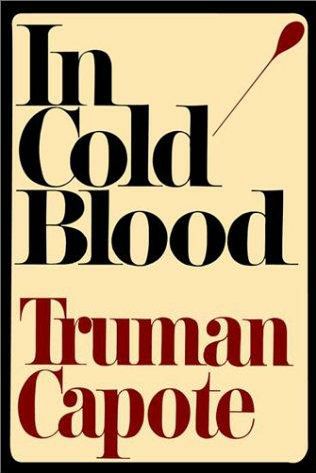
Back in high school, I read In Cold Blood straight from my Dad's stash of "New Yorkers," as it was originally published over the course of four issues. In both the magazine version, and in Capote's book, a preface forewarns the reader that all the quotations are taken "verbatim" from "official records" or interviews with those involved. The subtitle on my paperback edition of the novel reads: "A True Account of a Multiple Murder and its Consequences". Elsewhere it is referred to as nonfiction, and it's a book generally regarded as the first work -- or most well-known first work -- of New Journalism, the -ism that splashed a little narrative intrigue onto the pages of magazines and newspapers worldwide.

I'll admit that I haven't read James Frey's A Million Little Pieces, but I've nominally followed the fracas to emerge after The Word of Oprah deemed it a big, fat lie. Clearly, according to Oprah, Frey's mistake was calling the book an autobiography, and expecting that it would sit amid other works of nonfiction at your local bookstore, when he'd taken some liberties with his life story. At my local bookstore, Cody's, there's a table for "Nonfiction" and one for "Fiction," but I think Frey's book is just another in a long line of works, Capote's included, that demand a new table. Let's call it the "Ehh... A Little of Both" table.

Because let's get down to brass tacks, here. Sure, you could argue that there's such a thing as "pure" fiction and "pure" nonfiction, but a good portion of literature skirts the boundaries between these two categories. We might assume that a history book is telling us the truth (unless it's something Rush Limbaugh wrote) and therefore should sit with the other nonfiction goody twoshoes. But all writing is in essence a process of revision: that is, in the act of writing a history of the Napoleonic Wars, the historian makes the decision to include some things and omit others. Also, he might throw in a conversation or two that he didn't actually hear, or describe the buttons on someone's jacket even though he doesn't know anything about buttons, much less the buttons Napoleon wore. And that doesn't make the book any less of a history, it just admits that there is a narrative process at work in nonfiction, one that shoves our book about the Napoleonic Wars (a subject about which I know nothing, by the way) over to the edge of the prissy little nonfiction table, where Capote and Frey are teetering.

Fiction is the same way, and perhaps its crossover into nonfiction is a little easier to swallow, since historical fiction is fairly popular among grandparents and nerds these days (and uber-cool bloggers). Plus, no one has a hissy fit if a novelist includes something that's historical, whereas if a so-called nonfiction writer tosses in a couple of imaginary years in jail, well, the shit hits the fan. At least on Oprah.

These are a few of the issues I'm sorting out in my dissertation, if you hadn't guessed. I find it fascinating to think about that undefined space that In Cold Blood occupies: the space between imagination and reality. In an article I read today, a critic writing about testimonial novels (which are fairly similar, in some ways, to autobiographies like Frey's), says she believes that "readers are not aware of the fictitious aspects of testimonial novels," that the imaginary aspects of a "nonfiction" book are "perceived by literary critics but not by ordinary readers."

Now hold on just a gosh darn minute there! I'm not so sure we're* as dumb as we look. Are we?


*For the purposes of this "we," let's just pretend I'm not a literary critic-in-training, ok?

Labels:

Friday, February 17, 2006

The Rain in Spain... oh, enough already

OK, I promise I'll return to non-Spain-related topics soon, but I just have to gripe about something. Why do American journalists insist on rehashing the same old tired refrains when they write anything that even remotely has to do with Spain?

Example A
Washington Post article kindly forwarded to me by dl004d: "Gains in Spain"
This article is about cutting-edge Spanish architecture, so why must it belabor an old saying that no one uses anymore? Do people ever say "The rain in Spain falls mainly on the plain?" Do we really need that much help pronouncing our "ai" words? It's time to retire all the variations on this one.

Example B
New York Times article: "Investors Are Tilting Toward Windmills"
OK, this one doesn't bother me quite as much because it doesn't have anything to do with Spain, and it deals with some of Bush's "sounds good when read off the teleprompter" ideas about renewable energy. Still, there are other things that happen in Don Quijote that could be mined for metaphors. It's a long book.

Example C
The last paragraph in this old article on Flakmag: "The fame in Spain falls mainly on the plane..."
I mean, who comes up with this stuff? Oh wait. I wrote that one. Anyway, my point is that it's time to lay the overused Spanish refrains to an eternal sleep. They're not cute anymore, and I'm the first to admit it.

Labels: ,